
Why Most HVAC Companies Lose Jobs Before They Even Answer the Phone
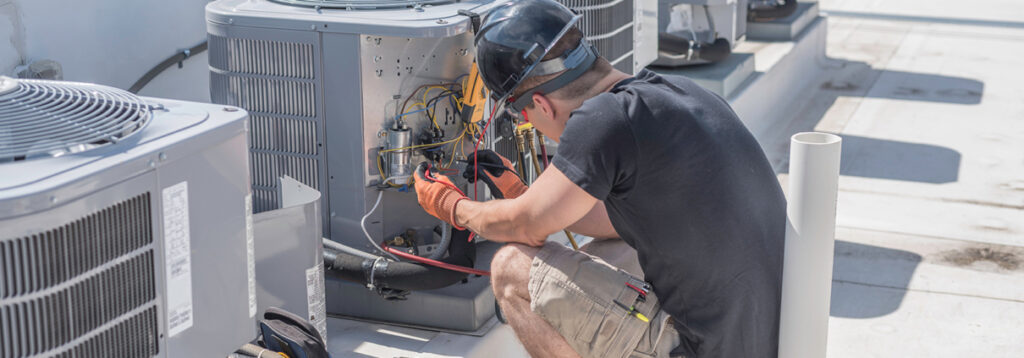
You’re on a rooftop in July. It’s 96 degrees, you’re elbow-deep in a compressor, and your phone rings. You can’t answer. You tell yourself you’ll call back in 20 minutes.
By the time you do, that customer has already booked someone else.
This happens dozens of times a month to HVAC companies across the country — and most owners never connect the missed call to the lost revenue. They just wonder why the phone seems busy but the schedule isn’t as full as it should be.
Here’s the truth: the biggest leak in your HVAC business isn’t a bad referral or slow season. It’s the calls you don’t answer.
The 5-Minute Window That Changes Everything
There’s a piece of research that should be pinned to the wall of every HVAC office in America. According to a study by Lead Response Management, the odds of converting a new lead drop by 80% if you wait longer than 5 minutes to respond.
Five minutes.
When a homeowner’s AC goes out in August, they’re not sitting patiently waiting for a callback. They’re sweating, they’re stressed, and they’re hitting the next number on Google. If you’re not the first company to respond, you’re probably not getting the job.
This isn’t a marketing problem. It’s a response speed problem — and it’s costing the average HVAC company tens of thousands of dollars a year in jobs they never knew they lost.
Why HVAC Owners Can’t Always Answer — And Why That’s Okay
Let’s be clear: not answering every call isn’t a failure of effort. It’s a reality of the job.
You’re in crawl spaces and attics. You’re driving between service calls. You’re explaining a repair to a homeowner face-to-face. You’re doing the actual work that keeps your business running.
The problem isn’t that you miss calls. The problem is what happens — or more accurately, what doesn’t happen — after you miss them.
Most HVAC companies have the same non-system: hope the customer leaves a voicemail, check messages when you get a break, call back when you can. By that point, the window has closed.
What your competitors who are winning aren’t doing is answering every call. They’ve built a system that responds automatically the moment a call goes unanswered.
What Happens When You Don’t Follow Up Immediately
Here’s what a typical missed call looks like from the customer’s side:
- Their AC stops working on a hot afternoon
- They Google ‘HVAC repair near me’ and call the first few results
- Your phone rings — you’re on a job, can’t answer
- They leave a voicemail or they don’t
- They immediately call the next company on the list
- That company answers or texts back within 2 minutes
- The job is booked — with someone else
You never even knew you were in the running.
Now multiply that by 3, 5, or 10 calls a week. During peak season, that’s potentially $15,000–$50,000 in lost revenue from jobs that were never captured — not because your pricing was wrong or your reviews were bad, but because you were 10 minutes too slow.
The Fix: Automated Missed Call Text-Back
The solution isn’t hiring a receptionist. At $35,000–$45,000 a year in salary, that’s an expensive fix for a solvable problem.
The solution is automated missed call text-back — a system that detects when a call goes unanswered and immediately sends a text message to that caller on your behalf.
Something like:
“Hey, this is [Your Company]. Sorry we missed you — we’re out on a job right now. What can we help you with? We’ll get back to you ASAP.”
That text goes out within 60 seconds of the missed call. The customer gets a response. They feel acknowledged. And critically — they stop calling your competitors.
From there, the conversation can continue via text, or the system can prompt them to book a call or schedule a service visit directly.
It’s not magic. It’s just speed — delivered automatically, even when you’re on a rooftop in July.
Why Text Works Better Than a Callback
You might be thinking: why not just set up a voicemail greeting that tells people to expect a callback? Because customers don’t want to wait. They want to communicate on their terms — and in 2025, that means texting.
Consider these numbers:
- Text messages have a 98% open rate vs. 20% for email
- The average text is read within 90 seconds of being received
- 85% of customers prefer receiving a text over a phone call for service businesses
When your automated text lands in a customer’s phone, they read it almost immediately. They respond. The conversation starts. And you’ve now entered the lead — without lifting a finger.
What This Looks Like in Practice for HVAC Companies
Let’s walk through a real-world scenario:
Monday, 2:14 PM — A homeowner calls your number. You’re finishing up an AC installation.
2:14 PM — The call goes to voicemail. Simultaneously, your automation fires a text: “Hi! This is Coastal Air HVAC. We missed your call but we’re here to help — what’s going on with your system?”
2:16 PM — The homeowner texts back: “My AC is blowing warm air. Need someone today if possible.”
2:17 PM — An automated follow-up asks for their address and best time to call.
2:18 PM — The lead is captured, categorized, and waiting in your system.
3:30 PM — You call them back with all the context you need. You book the job.
That customer never called your competitor. And you didn’t have to stop what you were doing to make it happen.
How Much Revenue Are You Actually Leaving on the Table?
Let’s do some quick math for a typical HVAC company:
- Average HVAC job value: $350–$800 (service) / $4,000–$12,000 (installation)
- Estimated missed calls per week during peak season: 5–15
- Calls that go cold without immediate follow-up: 60–80%
If just 3 of those missed calls per week convert to service jobs at $500 average, that’s $1,500/week — or roughly $18,000 over a 12-week peak season — recovered just by responding faster.
For companies doing installations, one recovered missed call could mean a $6,000–$10,000 job.
Stop Losing Jobs You Never Knew You Had
The HVAC companies that are winning market share right now aren’t necessarily the ones with the best technicians or the lowest prices. They’re the ones that respond the fastest and follow up the most consistently.
You’ve already done the hard work of building a skilled team and a solid reputation. Don’t let unanswered calls erase all of that.
If you want to see exactly how an automated lead response system would work for your specific business, we offer a free strategy call to walk you through it.
Book your free strategy call here →
Frequently Asked Questions
How quickly does automated text-back send a message after a missed call?
Most systems send the text within 30–60 seconds of a missed call — fast enough that the customer is still on their phone when it arrives.
Will customers think the texts are spam or automated?
When written conversationally (not salesy), most customers assume it’s a real person texting. The key is using natural, first-person language and personalizing with the business name.
Do I need special software or a new phone system to set this up?
No. Automated missed call text-back works alongside your existing phone number. You don’t need to switch carriers or change how your team communicates.
What if a customer calls after hours?
The system works 24/7. A missed call at 11 PM still triggers an immediate text, letting the customer know you’ll be in touch first thing in the morning — keeping the lead warm overnight.
How is this different from just hiring a receptionist?
A receptionist can only handle one call at a time, works set hours, and costs $35,000–$45,000/year. Automation handles unlimited simultaneous calls, works around the clock, and costs a fraction of that.
Is this useful for smaller HVAC companies, or just larger operations?
It’s actually more impactful for smaller companies. When you’re a 2–5 person operation, you can’t afford a front-desk person — but you also can’t afford to lose leads. Automation fills that gap at a price that makes sense for small business economics.